Saturday, 12 September 2020

Cloud SQL: "A Database or A Service of Google Cloud?"


Google helps us to manage our database fully. We can totally focus on our applications. For this "Cloud SQL" is a good solution .It is a fully-managed database service that helps us to easily set up, maintain and administer our relational PostgreSQL and MySQL databases in the cloud.

 It offers high performance, vertical scalability, and convenience.

You can try on "Cloud SQL" for free using the following site  " https://cloud.google.com/sql ".

If hosted on Google Cloud Platform, Cloud SQL will help you to provide database infrastructure for the applications running anywhere.

Mainly Cloud SQL is good for E-Commerce Applications, CRM tools, Word Press sites etc. It can also be used for the applications that are compatible with PostgreSQL and My SQL. Plus point of this is that , everything is automated that are all backups, replication, patches and updates.Even in this our data is automatically encrypted also. 

Key Features of Cloud SQL are as follows:

1) Scalability: Cloud SQL has the property of scalability as it can easily scale up to 64 processor core and 400 GB  RAM.

2) Integrated: It means Cloud SQL has the ability to integrate with any application whenever required irrespective of the geographical location. It can easily connect from App Engine, Compute Engine, and our workstation.

3) High Performance: This feature says that Cloud SQL can tackle small workloads to high intensive workloads.

4) Security :As I said earlier every data is automatically encrypted in Cloud SQL.So Cloud SQL customer's data is totally encrypted either it is backup, data in the databases, temporary files etc.

5) Fully managed :Saving time as backups, replication and management is taken care of automatically.

Such a great service by Google Cloud!!!!!!

Thursday, 23 July 2020

KUBERNETES

Kubernetes is mainly the container-orchestration system which is designed by Google and is now maintained by the Cloud Native Computing Foundation. It is actually an open-source container.

If we see the term Kubernetes, it simply means it is an open-source platform that automates Linux container operations.


 Google Kubernetes Engine (GKE) runs certified Kubernetes. It provides a controlled and managed environment for deploying, managing, and scaling, the containerized applications. It uses Google infrastructure for this.

In GKE, there are multiple machines that are grouped together to form a cluster. 

The question that comes in mind that why Google has go for Kubernetes or what is the need for making this engine. The reason here is to bring container orchestration to the masses, and the only way is to combine the open-source technology and built the community around it. 

The three main problems that the Kubernetes solved that are:
1) It is portable and runs on the cloud providers, bare-metal, hybrid, or both.
2) It is configurable and modular.
3) Auto-placement, Auto-restart, Auto-replication, and Auto-healing of containers are the mains feature it provides.

Do you also know that Kubernetes is also known as K8s . Here, 8 is for "ubernete", an eight-letter word.

One more question that comes in mind that Docker is a container, so is Kubernetes a docker, or are they different?

The point here to note that Kubernetes is a container orchestrator, whereas Docker is an application that helps to run containerized applications.

So, Kubernetes can run without Docker and can use other applications that managed many containerized applications like RunC, cri-o, etc. These are deployed with Kubernetes.
Also, Dockers can also be installed on the system and is a standalone application. But, If Dockers is deployed with Kubernetes, this combination goes very well.

Here, Kubernetes is discussed and it mainly developed for container orchestration. So, the next thing to think is what is the need for containerization in virtualization.

So, here is the answer, Containerization helps to eliminate the problem of transferring code from desktop computer to Virtual Machine (VM), or from Linux to Windows OS by bundling the application code, with configuration files, libraries, dependencies required it for it to run.

So, I think the Kubernetes is clear to all!!!!!


Tuesday, 21 April 2020

QUIZ 2

Multiple Choice Questions

ANATOMY OF CLOUD


Provisioning and Configuration Module:
It is the lowest level of the cloud and generally resides on bare hardware (such as firmware) or at the top of the hypervisor layer. Its function is to abstract the underlying hardware and provide a standard mechanism for generating virtual machine instances on demand. It also handles the post-configuration of operating systems and applications residing on the VM.
Monitoring and Optimization:
This layer handles the monitoring of all services, storage, networking and application components in the cloud. Based on the statistics, it could perform routine functions that optimize the behavior of the infrastructure components and provide relevant data to the cloud administrator to further optimize the configuration for maximum utilization and performance,
Metering and Chargeback:
This layer provides functions to measure the usage of resources in the cloud. The metering module collects all the utilization data per domain peruse. This module gives the cloud administrator enough data to measure the ongoing utilization of resources and to create invoices based on the usage on a periodic basis.
Orchestration:
Orchestration is central to cloud operations. Orchestration converts requests from the service management layer and the monitoring, chargeback modules to appropriate action items which are then submitted to the provisioning and configuration module for final closure. Orchestration updates the CMDB in the process.
Configuration Management Database (CMDB):
It is a central configuration repository wherein all the metadata and configuration of different modules, resources are kept and updated in a real-time basis. The repository can then be accessed using standards protocols like SOAP by third-party software and integration components. All updates in CMDB happen in real-time as requests get processed in the cloud.
Cloud Life cycle Management Layer (CLM):
This layer handles the coordination of all other layers in the cloud. All requests internal and external are addressed to the CLM layer first. CLM may internally route requests and actions to other layers for further processing.
Service Catalog:
It is central to the definition of cloud, SC defines what kind of services the cloud is capable of providing and at what cost to the end-user. SC is the first thing that is drafted before a cloud is an architecture. The service management layer consults SC before it processes any request for a new resource.

Featured Post

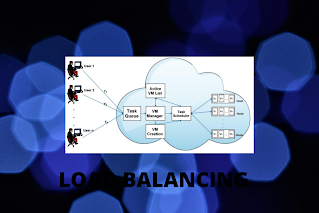
LOAD BALANCING IN CLOUD COMPUTING

                                                                        Cloud Computing is an IT paradigm where there are number of Cloud Pr...