Showing posts with label Cloud Computing. Show all posts

Thursday, 3 December 2020

LOAD BALANCING IN CLOUD COMPUTING


Cloud Computing is an IT paradigm where there are number of Cloud Providers and number of Cloud Users. These Cloud providers provide the services to the cloud users according to their demand. The services are in the form of Infrastructure as a service , platform  as a service and software as  a service. So, there are number of resources that are being shared among the users provided by the cloud providers. 
Thus, task scheduling and resource management are important  for keeping balance in the cloud environment.
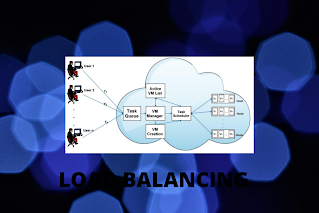
Here, comes the concept of load balancing . There are multiple tasks or requests by the users which need to be executed by the number of servers. The point here is which task should be mapped with which server and the constraint is no server or machine get overloaded or underloaded. 
Here, overloaded means that server already have lots of tasks to execute and if some other tasks come for execution, the processor is already busy and will delayed the execution whereas underloaded servers are the where the processor of the server is ideal.

Some of the resources that can be load balanced are: 
  • Network interfaces & services such as DNS, FTP & HTTP.
  • Processing through computer system assignment.
  • Access to application instances.
  • Connection through intelligent switches.
  • Resources of storage.
 

Monday, 5 October 2020

Steps: How to create your EC2 instance from AWS console?

 1) After Sign-in , Welcome to AWS Management Console.


2) Write EC2 in Find services, select it from the list shown. 


3) This is the page, we get


4) Click on instance in from the left panel.

5) Click on Launch instance button.

6)This page is available after that which shows various Amazon Machine Image.


7) In this , "Ubuntu server " is being selected for creating instance. Following page is available from we can choose Free tier instance type.

8) Click on Configure Instance Details. Following page is available.(Here default value is selected).

9) Then , click on Add Storage(Here, also value taken as default value)


10) Click to Add tag, Following page is available. 


11) In the Name column : write "Type" and in value column write: "Demo". The two tick  marks of blue color is visible towards right.

12) Then, Click on "Configure Security Group" button.

13)Following page is visible to us:


14) In the above page, In Security Group Name, "Demo" is given as value. Protocol  is TCP, and Port Range is 22.

15) Then, Click on "Review and Launch" button. 

16) Following page is seen:


17) On the above page confirm all the parameters of : 

AMI Details

Instance Type

Security Groups

Instance Details

Storage

Tags

18)  Then, Click on Launch.

19) The dialog box came, asking for "Selecting an existing key pair  or create a new key pair" 


20) Here, "Create a new key pair"  is selected and Key Pair Name given is "Demo".

21) Download the Key Pair, and Click on "Launch Instance".

22) Finally got the following page:


23) It will take few seconds to create an instance, and there will be a tick mark that the instance is launching. Then Click on the instance.(marked by black pen)


24) Finally , instance is created and is running.


25) Instance summary is as follows:


26) Then Go for Putty, and copy the public IPV4 address, in the address asked and for login: write "ubuntu".
27) So, finally an EC2 instance is created.


Tuesday, 29 September 2020

STEPS FOR SETTING UP BILLING ALARM IN AWS CONSOLE


1) Login to AWS Console.

2) AWS MANAGEMENT CONSOLE will be seen like this.

3) At the top right corner where your name is written click on that, from t

hat drop down menu select "MY BILLING DASHBOARD".

4) Following page will come:


As expenditure is zero so here is 0$.

5) In ALERTS & NOTIFICATION, Click on "ENABLE NOW".

6) So coming to "BILLING PREFERENCES", Click on "RECIEVE BILLING ALERTS", then "SAVE PREFERENCES" BUTTON.

7) After that you are able to see the link "MANAGE BILLING ALERTS" ,with the "RECIEVE BILLING ALERTS"; Click on that.

8) It takes you to the "CLOUD WATCH" service page.

9) On the left side menu is the alarms section click on that , and then on billing section.

10) It will take  you to "billing alarm" page, set the threshold as for example as "1 USD" , it will give the notification if you exceed this limit.

11) in  a "SEND A NOTIFICATION TO " box write the email address where the notification will be mailed .

12) Click on "CREATE ALARM" button.

13) As soon as you click the alarm button, it will confirm new email address. 

14) Then you have to move to the email account and click on confirm subscription.

15) It will confirm the subscription and is shown AWS console also with the green tick mark.

16) Then, Click on VIEW ALARM.

17) Finally an alarm is set, which states that if the usage goes beyond 1 USD it will notify at a defined email address.


Sunday, 20 September 2020

Mobile Cloud Computing

 "Mobile Cloud Computing" term  itself denotes as it is a combination of two concepts that is cloud computing and mobile networks. When the advantages of both merged up we get a new concept known as Mobile Cloud Computing.

This new emerging technology helps to bring benefits for mobile users, network providers, and mobile networks.

Can you imagine, how many people instead of using PCs, preferred to use smart phones for maximum work. This is due to mobile devices are more compact and comfortable to use; and the most important thing is internet is now accessible on mobile devices too.  

So, mobile devices are preferred over PC. Even now a days small start ups and businesses are also dependent on these mobile devices. So, if these mobile networks when combine with the cloud computing concepts, the user able to get the infrastructure, platform and software, anywhere, everywhere and anytime. 

Main reasons for using this mobile cloud computing are :

1) It helps to easily share the content and assets.

2) It also helps to easily maintain  the data

3) It also handles and tolerate the crashes and deletion of data

4) Most important is cloud computing is the main part brain of this concept

In actual terms, Mobile Cloud Computing is the infrastructure where the processing and storage of data is done outside the mobile devices.

Some of the characteristics of mobile cloud computing are:

1) Scalability  2) Reliability  3) Security  4) Reduced cost  5) Reduced Maintenance

Mobile Cloud Computing  architecture is as follows:


Applications of Mobile Cloud Computing are:
1) improves reliability
2) security
3) Processing speed  and data storage capacity increases
4) It also helps in increasing battery life of mobile devices
5) improves availability


Tuesday, 21 April 2020

ANATOMY OF CLOUD


Provisioning and Configuration Module:
It is the lowest level of the cloud and generally resides on bare hardware (such as firmware) or at the top of the hypervisor layer. Its function is to abstract the underlying hardware and provide a standard mechanism for generating virtual machine instances on demand. It also handles the post-configuration of operating systems and applications residing on the VM.
Monitoring and Optimization:
This layer handles the monitoring of all services, storage, networking and application components in the cloud. Based on the statistics, it could perform routine functions that optimize the behavior of the infrastructure components and provide relevant data to the cloud administrator to further optimize the configuration for maximum utilization and performance,
Metering and Chargeback:
This layer provides functions to measure the usage of resources in the cloud. The metering module collects all the utilization data per domain peruse. This module gives the cloud administrator enough data to measure the ongoing utilization of resources and to create invoices based on the usage on a periodic basis.
Orchestration:
Orchestration is central to cloud operations. Orchestration converts requests from the service management layer and the monitoring, chargeback modules to appropriate action items which are then submitted to the provisioning and configuration module for final closure. Orchestration updates the CMDB in the process.
Configuration Management Database (CMDB):
It is a central configuration repository wherein all the metadata and configuration of different modules, resources are kept and updated in a real-time basis. The repository can then be accessed using standards protocols like SOAP by third-party software and integration components. All updates in CMDB happen in real-time as requests get processed in the cloud.
Cloud Life cycle Management Layer (CLM):
This layer handles the coordination of all other layers in the cloud. All requests internal and external are addressed to the CLM layer first. CLM may internally route requests and actions to other layers for further processing.
Service Catalog:
It is central to the definition of cloud, SC defines what kind of services the cloud is capable of providing and at what cost to the end-user. SC is the first thing that is drafted before a cloud is an architecture. The service management layer consults SC before it processes any request for a new resource.

Monday, 24 February 2020

Examples Of Cloud Computing Close To Home.


You've heard about cloud computing and you also know that it is being used more and more in various configurations, however, you may not yet understand exactly what it is. The truth is that you are probably already using some form without even realizing it. Let's take a look at some examples of cloud computing and find out if any of them sound familiar.


If you have heard (or used) of Dropbox, you have used cloud computing. You can place a credit card application for Dropbox on the devices you want, and you can access the files stored in the application from those devices. Someone who concentrates on a document at home can place it in Dropbox and someone from the other side of the world with the same account can pick it up and do whatever they want when using it. Syncplicity is another similar service.

Social networks also use cloud computing. By entering data and photos on the easy-to-use site, you can share it with your friends around the world. Everything is stored within the cloud and is accessed simply by entering your bank account at any time. Of course, your information can also be shared with those who run the service, which may pose privacy and security issues, but many people seem willing to take risks to safeguard the convenience of the service.

There are several hosting services that offer you storage of documents, images, videos along with other information. YouTube, Picasa, and Flikr are also cloud computing services. Google Docs Zoho Office along with a number of others give you the ability to create documents that can be used in collaboration to edit and share.

Email is probably the most used application of cloud computing. When you use a web-based email service, you use that technology. It does not run and store the email program on your PC but allows cloud computers, or even the Internet, to do it for you. It gives you much more storage than you could store on your PC because there is a lot of storage in the back.

Offsite backup services are another example. You can store your data, photos and other data by yourself, but it is also important to have an online backup. Keep a duplicate of everything inside the cloud using services such as Carbonite, JungleDisk or Mozy. This often facilitates access to your data anywhere in the world and protects it against security problems if your computer or storage products are stolen or damaged.

Cloud computing plays a role in many facets of our lives. With an increasing number of uses, it is likely to be only popular in the coming years. Although you will encounter security problems when your data is stored off-site, there is also a long list of benefits that are presented, as clearly seen through these everyday examples of cloud computing.

What Cloud Computing Companies Are Offering?


Cloud computing is undoubtedly what's hot, but it's not just a trend. In the information age, we all need to store data and use a virtual space only makes sense.
Cloud computing gives you the opportunity to store data without having to own the hardware. It also gives you access to those files online, which means you can recover them anytime, anywhere. You can assign them, modify them and accumulate them without needing your hard disk.
That is because they are stored in another person. It is outsourcing storage and computer software and spending money on them as a service instead of a product. Cloud computing offers software as a service (SaaS), platform as a service (PaaS) and infrastructure as a service (IaaS), all through the cloud.
Cloud computing companies provide you with the service you will often get for free with a limited amount of space. For a larger capacity or small business, you can pay for the service per user, as a software application. Potentially, you can get the best quality service and storage at a low fraction of the cost of setting up on the site.
In recent years, cloud computing has really been removed, causing many new and smaller companies to appear offering cloud services. However, most users choose to use larger cloud computing providers that they may already be using for other services.
Let's take a look at some of the most popular cloud computing companies and what they have to offer.
Known as a true pioneer in cloud computing, Amazon has offered its customers cloud computing services since 2006. It began using technology for its own use and for its customers to take full advantage of their other services and products. Providing technology as customer service for personal use would be a logical next step.
Amazon's Elastic Compute Cloud (EC2) offers online computing capability, while the Simple Storage Service (S3) provides storage capacity when necessary to meet the growing and fluctuating needs of the user.
Amazon remains one of the most important names in cloud computing, although there have been questions about its reliability before. Amazon customers consider it convenient to add the service to the other services they will use from the company.
GoGrid makes a name for itself in cloud storage and computes the market by providing storage and virtual servers (Windows and Linux) that are quickly deployed in the cloud. GoGrid is one of Amazon's main competitors.

No one has to explain that Google includes the habit of being at the forefront of user satisfaction. If there is a way to make life easier for the client, he is eager to find it. And they have done it repeatedly. They have been offering several cloud computing services for a long time from Google Docs, and the ability to create documents, spreadsheets, and presentations and share them.

Google also has Google Apps, which is a set of online office tools, such as email, website creation, calendar, and word processing: all the basics for office productivity.

Google App Engine is really a PaaS that allows the user to create and host applications in Google's infrastructure. In fact, App Engine offers a viable alternative to PaaS using your company's services and is highly appreciated by developers.

AT&T; offers cloud computing as a natural addition to the Telcom services they previously provided. With all the infrastructure already in place, they can offer the Synaptic Hosting application hosting service with the use of virtual storage and servers, as well as network and security features.

So far we have touched on a number of the leading and well-known cloud computing companies, but there is also a range of newer companies that specialize in cloud computing. Some of them have advanced a lot in the field and have a very promising future.

Some new companies since the last year or two include people like Domo, and their goal is to help business executives get information when they want it and how they need it.

Social Dynamax allows companies and workers in contact centers to organize and respond to messages and other user communications. It opens a means to monitor and analyze the relative communications published on Facebook, Twitter, and other sites.

OneOps is a cloud provider that offers you a way to manage all your applications centrally, independently

Tuesday, 11 February 2020

GRID COMPUTING VS CLOUD COMPUTING


While Grid Computing and Cloud Computing have numerous features in common, they also have distinctions that could make one favorable within the other in some cases.
While they are not mutually exclusive and one can be used within the other, let's take a first look at what they have in common and then explore their differences.
In the user's perspective, both grid and cloud computing looks very similar.
This is because abstraction is one of the necessary options of both.
Although several complex computing processes take place, the user does not have to understand the details of the methods that are performed.
These processes are essentially masked (abstracted) through the simple interface with which it interacts.
Receive input and output in an easy to use way.
Both types are forms of distributed computing that use multiple servers and save computing with a kind of specialization.
In cloud computing, the user has access to a variety of services without the need to invest in the architecture to use it.
It offers many different services, from generic text processing to web hosting and custom software for any specific company, which can be used without the need for software and hardware that would be required without the cloud.
The services provided can be improved as a result of additional hardware and memory accessibility.
And you can store objects of almost any size, small or large.
In  Grid Computing, considerable work, controlled by a system, is divided into individual tasks that are performed separately in equivalent time.
However, although interdependent tasks can be carried out, it significantly slows the procedure.
This is the reason why grid computing is ideal for jobs that have been parallelized, or the code is divided into parallel tasks, rather than interdependent tasks.

Grid Computing jointly accesses a variety of servers, creating the use of their untapped process power.
On the other hand, it is not the most efficient for storing small amounts of data.
It is more suitable for calculating intensive operations.
While you will often find grid computing around the back end of a computational cloud or perhaps a cloud within a computational grid, each of these features has its own unique set of features that make it suitable for different jobs.
Cloud computing can combine a wide variety of services to present the consumer with an optimized result without problems.
Grid computing can handle very intense tasks using high processing power and do so in a short time due to parallel processing.
It is easy on the surface to confuse the two when you compare grid computing with cloud computing in more detail, you can see that, although they have many.

Monday, 10 February 2020

5 FREE CLOUD STORAGE FOR SMALL BUSINESSES


You all understand that the exploitation of the cloud will bring great blessings to all low businesses. regularly pay cash in hardware to store your files and applications, why not consider cloud exploitation? Instead of sending documents by email from one place to another, why not store them centrally in the cloud?
From comparatively corporations like Adrive, Box and Dropbox, to heavy Google and Microsoft, several of them use free cloud storage as the easiest way to tempt users in their clouds in the hopes that they pay a lot for Additional volumes and services. Next, there are five high free cloud services that you should understand.
1. GOOGLE DRIVE (FREE 15GB STORAGE)
Google Drive could be file storage and synchronization service created by Google. This service allows users to store files within the cloud, share files and edit documents, spreadsheets and screens with collaborators. Google Drive encompasses Google Docs, Sheets and Slides, a set of associated workplaces that allows cooperative written material for documents, spreadsheets, screens, drawings, forms and more.
2. MICROSOFT ONEDRIVE (FREE STORAGE 15GB)
OneDrive (formerly called SkyDrive, Windows Live SkyDrive and Windows Live Folders) could be cloud storage and file hosting service that allows users to adjust files and access them from an online browser or mobile device later. With this, users will share files publicly or with their contacts, publicly shared files do not need a Microsoft account to access. It is part of the set of online services known as Windows Live.
3. ADRIVE (FREE 50GB STORAGE WITH ADAPTED AD)
ADrive provides online cloud storage services for clients, United Nations agencies, individuals, businesses and business-level users. Its objective is to offer users a convenient and reliable service thanks to greater management of their knowledge from almost anywhere at any time. From the moment it was absolutely based in 2007 by veterans of the storage and network trade, ADrive was created to meet the stress of our data-intensive world. From the beginning, it is the web storage business giving the freest storage and backup on the web.
4. BOX (FREE STORAGE 10GB WITH TRANSFER SIZE OF 250 FILES)
Box (formerly Box.net) is an Internet file sharing and private cloud content management service for businesses. The company adopted a freemium business model and provides up to ten GB of free storage for private accounts.
5. DROPBOX (FREE STORAGE 2GB)
Dropbox could be a file hosting service operated by Dropbox, Inc. in the city of California, which offers cloud storage, file synchronization, personal cloud, and buyer package. Dropbox provides users to make a special folder on their computers, which Dropbox synchronizes to look like a similar folder (with similar content) despite what PC is used to look at it. Files placed during this folder are also accessible through the Dropbox website and mobile applications.

Wednesday, 15 January 2020

How to find the score of your machine ?

1) Run the command prompt of the system by writing cmd in the run in the Start Menu.
2) It will open the command prompt with the black screen.
3) Go to the directory C:\Windows\System 32>
4) Write the command  "winsat prepop"
     If this doesn't work, then you can try for "winsat formal"


4) This command will run


5)Next, open a PowerShell command prompt, and write the command "Get-WmiObject -class Win32_WinSAT".
The output is as follows:


Finally, you get the score of the machine.


Note: If the command "Get-WmiObject -class Win32_WinSAT " , this doesn't work then write "powershell -command" before "Get-WmiObject -class Win32_WinSAT ".


Cloud Computing

Virtualization

Score based Workflow Scheduling Algorithm

Workflows in cloud computing  means the certain steps that will occur in a sequence to achieve an objective in a particular environment. Workflows mainly is in the form of DAG (Directed Acyclic Graph),where the node represents the task and the edge between the two tasks shows the dependency between them.
Score Based Workflow Algorithm, will help to find out that which resource should be allocated to which task.
In this algorithm score concept is used. Score is used to measure the hardware capability and to calculate the minimum performance requirement of the workflow tasks. Score can be find out using the WINSAT tool in Windows.


An algorithm is as follows:

1) First, the tasks T1, T2, T3,...Tn tasks are submitted.
2) Next Step, is to avail the virtual machines V1, V2,...Vn.
3) Assign the deadline to the Workflow tasks.
4) Find the score of the virtual machine,
    where
 A score of the Virtual Machine=min(Subscore of processor, Subscore of RAM, Subscore of  Disk)


5) Check the list of tasks, as if there are any jobs to schedule.
     If yes repeat the next three steps, else return the mapping of resources to tasks.
6) Select the least score VM from the list of the Virtual Machines that fulfills task's threshold, where       threshold is defined is based on the instruction length of the task.
7) Now, the selected VM is used to execute the task which has defined deadline, so, if VM is able to execute the task within the defined deadline, then that task is allocated to VM, else new VM is selected which has the least score from the set of the resources.
8) The next task is selected from the list.If all tasks are organized then their mapping to VMs is returned for the simulation.

Cloud Computing

Virtualization

Tuesday, 7 January 2020

What is Cloud Computing?

Cloud computing is usually associated with the accessibility of on-demand for resources and computing power. The resources are usually the infrastructure, the platform or the software system.
The best example to understand the concept of cloud computing is that electricity returns to our homes and is measured by the meters. For the abuse of electricity, there are completely different square measurement sockets and switches. Every time we would like to charge our mobile phones, use the microwave or use an electric refrigerator, etc., they use electricity according to the device. Therefore, the bill includes accordingly, the devices use electricity.

In the same method, Cloud Computing is that model on-demand to provide services within the type of infrastructure as a service, platform as a service and software systems as a service. Then, regardless of the user's use within the amount of their time, the cloud provider can send the invoice to the user accordingly.


There are certain attributes of cloud computing:
1) Self-service: The user simply needs to present an Associate account and can request services from the service provider. Totally, a conception of self-service without the involvement of the third person.
2) Service catalog order: The service catalog can be a document that shows the offers of companies for users, which is managed and maintained by the catalog administrator or administrator.
3) Measurement and billing: One of the main vital attributes is that the activity, regardless of the services used by the user; it must be measured so that the service provider charges it according to the use.
4) Elastic Scaling: According to user requirements, resources are often rescaled and reduced.
5) Rapid Provisioning: In Cloud computing, the user obtains resources or services in just one click do not have to move here and there for the services.

6) Advanced Virtualization: Virtualization is the technology that enables cloud computing.

Featured Post

LOAD BALANCING IN CLOUD COMPUTING

                                                                        Cloud Computing is an IT paradigm where there are number of Cloud Pr...